
2016
New Phishing Campaign Targets Retailers’ Customer Service Reps
 by alamat & 1 other (via)
A new malware-ridden phishing campaign has been found targeting retailers’ customer service representatives and managerial staff, researchers warned.
2011

Testez vos collaborateurs au phishing
 by Giraultises
OneLogin Phishing Test est un outil simple qui vous permettra de tester votre entourage au phishing de Google Apps. Vous aurez ensuite accès au rapport de résultats et pourrez agir en toute connaissance.
2010


Opération massive de phising sur Gmail en Tunisie | ReadWriteWeb France
 by srcmax
Depuis quelques semaines mes compatriotes en Tunisie ont commencé a se plaindre de difficultés d’accés a Gmail et des rumeurs ont commencé a circuler sur une censure prochaine de Gmail. Depuis le mois d’avril une vague de censure a frappé flickr, YouTube, Dailymotion et un nombre incalculable de blogs : ils n’en fallait pas plus pour créer un climat de paranoia… qui va s’avérer justifié.
A New Type of Phishing Attack
 by philippej (via)
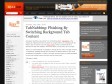
"You can try it out on this very website (I’ve only tested it in Firefox). Click away to another tab for at least five seconds. Flip to another tab. Do whatever. Then come back to this tab."
2009


Securing a Domain: SSL vs. DNSSEC
 by marco
There has been quite a bit of talk lately about the best way to secure a domain, mainly centered in two camps: using Secure Socket Layer (SSL), or using DNS Security Extensions (DNSSEC). The answer is quite simple—you should use both.

2008



PwdHash
 by CharlesNepote & 4 others
PwdHash is an browser extension that transparently converts a user's password into a domain-specific password.

disambiguity - » Design Ethics - Encouraging responsible behaviour (en)
by CharlesNepote
Leisa Rechelt appelle les réseaux sociaux à plus des responsabilité dans leurs pratiques d'interopérabilité. Sous prétexte de commodité (souvent découvrir de nouveaux amis), certains réseaux sociaux nous demandent nos identifiants et mot de passe de certains de nos comptes (gmail, hotmail, twitter, etc.). Dans la réalité, cette pratique représente un gros problème car elle crée un (amical) précédent qui ouvre grand la porte au phishing.

2007

PhOff Home
by CharlesNepote & 2 others
" Welcome to the home of the
Anti-Phishing, Anti-Pharming, Anti-SpooPhing
FireFox Extention
Ph-Off "
The Undevelopment Blog » Identity Manager: A Browser-Based Solution to OpenID Phishing
by CharlesNepote
"It seems like the OpenID community is currently bothered with the following two questions:
1. OpenID facilitates phishing. What can be done about this?
2. FireFox 3.0 will have CardSpace and OpenID support. What does that mean?"



Top 10 Internet Security Threats
by vikrantsharma1 & 1 other
The summarized review of Symantec's XI Internet Security Threat Report

