PUBLIC   marks

PUBLIC MARKS with tag ville

Sponsorised links

November 2009

Aqualta - a set on Flickr

by karlcow

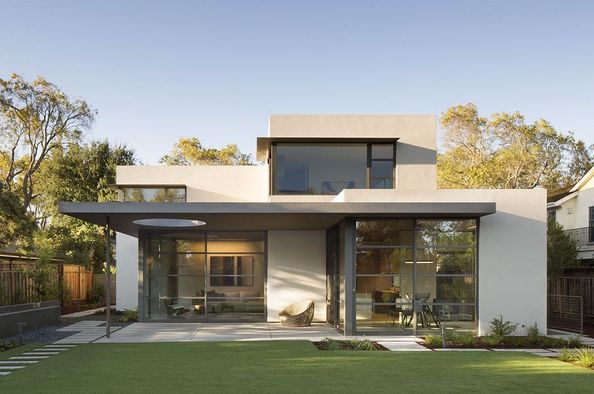
A series of images by Studio Lindfors

The Mobile City » Blog Archive » review: Stephen Graham – The Cybercities Reader (2004)

by karlcow

ICTs and the global city are not substitutes but complementary, and often modify each other in qualitative new ways.

the CLOUD

by karlcow

The CLOUD proposes an entirely new form of observation deck,connecting visitors to both the whole of London and the whole of the world, immersing them in euphoric gusts of weather and digital data. Each individual footstep on the ascent to the CLOUD participates in a vast collective energy-harvesting effort. Everyone around the world can contribute to the Cloud - whether by visiting or by sponsoring an LED, helping to keep the London lamp aflame.

everydata lab

by karlcow

EVERYDATALAB

*

atelier de recherche sur les nouveaux médias numériques fondé par christophe cariou : docteur en économie, chercheur freelance, professeur associé à sciences po de rennes, directeur du master management des médias écrits

Perspectives de vie à Londres et à Tokyo imaginées par Stephen Taylor et Ryue Nishizawa » À propos

by karlcow

Ce site web est une partie intégrante de l’exposition Perspectives de vie à Londres et à Tokyo

toronto.ca | Open

by karlcow

The City of Toronto (City) now grants you a world-wide, royalty-free, non-exclusive licence to use, modify, and distribute the datasets in all current and future media and formats for any lawful purpose. more

RIHM Revue des Interactions Humaines Médiatisées Editions Europia, Paris, France - Sylvie LELEU-Merviel, Khaldoun Zreik - Revue d'Interaction Homme Machine

by karlcow

En effet, la numérisation massive des échanges et de la diffusion transforme en profondeur la relation entre l'usager et les médias, a la fois au sens de données de toutes natures (textes, images fixes et animées, sons, ...) et au sens d'instances éditoriales de masse ou communautaires. Internet, le Web et les blogs, mais aussi la Télévision Mobile Personnelle, les pod-casts, la V.O.D., les services accessibles en téléphonie mobile, etc. modifient les contenus et les programmes, impulsent l'émergence de nouvelles écritures, mais bouleversent aussi les économies en place ainsi que les pratiques de communication interne et externe des organisations et le travail collaboratif , créent des espaces contributifs d'expression individuelle et collective, redéfinissent les frontières entre professionnels et amateurs.

hyperurbain » A propos du blog Hyperurbain

by karlcow

l’espace urbain, à sa représentation, ainsi qu’aux créations et réappropriations de cet espace par les artistes et chercheurs. Il propose ainsi une veille pluridisciplinaire (Sciences de l’Information et de la Communication, Science de l’ingénierie, Ergonomie, Art, Architecture, Urbanisme, Géographie, Sociologie, etc.) sur les innovations technologiques (réalité virtuelle, réalité augmentée, réalité mixte, Internet et mobilité), les pratiques artistiques et les nouveaux usages dans les domaines de l’art, du jeu, du patrimoine et du tourisme.

Hyper Urbain

by karlcow

La série des colloques « HyperUrbain » propose des réflexions sur la conception de la ville « sociale » (sociale ici voudra dire une conception centrée sur l'utilisateur de l'espace urbain) où les modalités de communication, de sociabilité, d'apprentissage, de transaction, de travail, etc. passent par des différentes formes d'(auto)régulation, dont un nombre croissant repose sur les Technologies d'Information et de Communication (TIC).

Voilà, CityMurmur! (please read with French “R”) | DensityDesign | Communication Design & Complexity

by karlcow

Theme of the symposium was “la ville cartographiée” (the city map), and to give our contribute to the discussion, we were warmly welcome to the ‘Cité des sciences et de l’industrie‘; built in the 19th arrondissement, just beside Parc de la Villette, ‘La Cité des Sciences et de l’Industrie’ is one of the world’s largest and most visited science museums, and looks as an impressive modern site which offers a wide variety of exhibitions and shows.

Urban Age | Conference | Istanbul | November 2009

by karlcow

On November 5, Urban Age will inaugurate an intensive two-day conference on the future of cities in Istanbul, an expanding metropolis and one of the worlds first global cities. 100 innovators of urban change from 15 countries, half a dozen mayors, renowned scholars and authors side-by-side with architects and developers leading major urban regeneration projects around the globe will offer presentations about urban transformations in 25 cities. The conference will engage an invited audience of over 300 urban policymakers, academics, designers, planners and developers to explore the vast and complex challenge of contemporary city making and the interconnected issues of the impact of the global economic condition on world cities, the effect of climate change on urban sustainability and the role of urban design in creating socially cohesive environments.

Sponsorised links

October 2009

cityfont.com|City Font Project

by Spone
The City Font Project has the concept to realize the identity of city by importing respective indivisuality and attractiveness of the city into the font. By applying the font to the every media unitedly, the City Font does let the city identity build up, does let the citizen unite, and will be the tool to express the regional attractiveness effectively.

Space and Culture : “The city that never was but could have been…”

by karlcow

architects Irene Cheng and Brett Snyder “have created a virtual map to guide users around Manhattan to sites where projects they describe as ‘visionary’ were planned but never built. The map is available as an interactive iPhone application…that uses GPS technology to detect when a user is near any of the roughly 50 notable sites, triggering a feature that allows the user to learn about the proposal through the architect’s foiled designs and words.

Rio youth use GPS phones to put favelas on map

by karlcow

"People think that there's nothing here but violence. But I want to show them! The favelas are above all places of life, of meetings," she said.

Toward urban systems design « Adam Greenfield’s Speedbird

by karlcow

you said: “Especially given the by-now-clichéd recognition that we’ve decisively become an urban species”

It is indeed very interesting to think about urban systems design given there was a major move toward cities. That said I have the feeling that this move comes with, at least, three issues:

1. access to the “thought” urban environment,

2. the space left where 50% of the population is still living,

3. the space of this growth

There are many areas in the world where the growth of the cities is made by people without access or a limited access to the thought urban environment. Poor people living in slums or just in a space which is not part of the work of urban planner per say. In a recent exhibition about slums I went, it was very interesting to see that the organic structure of the slums was making possible for the individuals to create a rich and meaningful space, driving sometimes to less criminality than more traditional areas of the city. The slum is a forced collective creative space for survival.

The rest of the population, the 50% living in deserted areas are the forgotten of this story. It’s indeed more “fun”, interesting for researchers, sociologists to observe and think about the density in urban space (richness of interactions) more than the low level of activities in the “countryside”. Though there are equal challenges there in terms of design and space organization, access to services, etc.

Finally, is it really cities which are growing? What we call urban space often relates to the city center, but I have the feeling that the growth is happening in the in-between space (suburbs), which is again a complete disaster in terms of design, even more so in rich countries. The private space is becoming a space of non-creativity, dead areas of non activities. Someone, who wants to start a small business in between two buildings on the grass of a random suburb of a rich city, will not last for very long. Complete different dynamic than the slum where unregulated areas give the opportunity of creative solutions for surviving or living.

Chris Heathcote: anti-mega: the informational city

by karlcow

44.5% of people use the Tube map to walk round London.

De nombreuses choses ne sont pas utilisées pour quoi elles ont été prévues.

Ctrl-N/ journal » Blog Archive » Psychosociologie de la vie quotidienne : fonctions de la rue

by karlcow

a rue est un “texte social” qui mêle signaux (simples, systèmes binaires), signes (complexes, systèmes ouverts) et symboles (stables et porteurs de sens inépuisables) en des proportions équilibrées et dans des combinaisons infiniment variées, créant richesse, banalité ou ennui.

L'unité lexicale du paysage urbain européen est la rue avec son nom, source d'orientation. Nous écrivons sur des lignes horizontales nos textes. Les mots s'appuie sur un parcours linéaire. En revanche, au Japon, l'unité lexicale est le bloc avec un système centré sur ce qui est entre les rues et non pas les rues. La rue n'existe pas, elle n'est pas nommée. Les textes s'écrivent mot par mot (kanji) au coeur de carrés. À l'intérieur des lignes.

September 2009

Laurent Haug’s blog » Blog Archive » Street computers

by karlcow

Seoul is one of the world’s most wired city, and the recent “ubiquitous city” project aims to increase the level of connectivity citizens experience on the street. One of the most visible part of the u-city is the media poles forest, tenth of computers embedded into high poles offering services like news, submay and bus maps, email postcard, 3D avatar game, casual games, shopping/restaurant locator and Flickr photo gallery (more). This sort of rich country’s version of the hole in the wall is extremely popular, and many couples and groups gather around the screens to share a moment playing games or sending a postcard.

Urban Screens | Serial Consign

by karlcow

What I've outlined thus far leads in to some of the questions that I'm considering with my research:

* What are the implications of an increasingly geospatial web for cartography and our experience of the city?

MapOSMatic

by karlcow & 4 others

MapOSMatic est un service Web en Logiciel Libre qui vous permet de générer des cartes de villes en utilisant les données OpenStreetMap. La carte d'une ville est constituée de deux pages :

* la carte elle-même, découpée en carrés pour faciliter la recherche de rues ;

* un index des rues référencées selon les carrés de la carte.

Les cartes générées sont disponibles aux formats PNG, PDF et SVG et sont prêtes à être imprimées.

Les données utilisées pour la génération des cartes provenant d'OpenStreetMap, vous pouvez librement réutiliser, vendre, modifier, ... les cartes générées (en respectant la licence OpenStreetMap).

BLDGBLOG: The Mushroom Tunnel of Mittagong

by karlcow

Dr. Arrold has been growing mushrooms in the Mittagong tunnel for more than twenty years, starting with ordinary soil-based white button mushrooms and Cremini, before switching to focus on higher maintenance (and more profitable) exotics such as Shimeji, Wood-ear, Shiitake, and Oyster mushrooms.

PUBLIC TAGS related to tag ville

no tag

Sponsorised links