
2009
Ident Engine
 by nhoizey
"Without much conscious thought, most of us have built identities across the web. We've filled in profiles, uploaded photos, videos, reviews and bookmarks. The Ident Engine uses semantic web API’s to bring together these web footprints."
Knowee / nhoizey
by nhoizey
Encore un site proposant l'agrégation de vos contenus sociaux, mais avec enfin une utilisation orientée Web Sémantique, notamment RDF et requêtage SPARQL !
2008
SCOT:Let’s Share Tags! » papers about tag ontologies
by nhoizey
There are many efforts to bridge between social tagging and Semantic Web technologies. Although we focused on representation issues of tagging activities, it might be useful to know current efforts.
Dan Grossman - Open Calais Tags
by nhoizey & 1 other
Open Calais Tags is a PHP class for extracting entities from text using Open Calais. Calais performs semantic analysis of the text, using natural language processing to identify concepts like people, companies and technologies discussed in the text
Calais - The Calais Web Service Roadmap
by nhoizey
R3 – July 2008: Calais R3 begins our journey to incorporate a number of additional languages within Calais. On the roadmap for R3 through R3.2 are Japanese, Spanish and French with additional languages coming in the future.
D2R Server – Publishing Relational Databases on the Semantic Web
by nhoizey
D2R Server is a tool for publishing relational databases on the Semantic Web. It enables RDF and HTML browsers to navigate the content of the database, and allows applications to query the database using the SPARQL query language.

TagSchema - MySQLForge Wiki
 by mbertier & 2 others (via)
This page and related pages describe various issues surrounding the Web 2.0 tagging and folksonomy concepts, including discussions on schema architecture, common data access patterns, and replication/scale-out guidelines.
2007
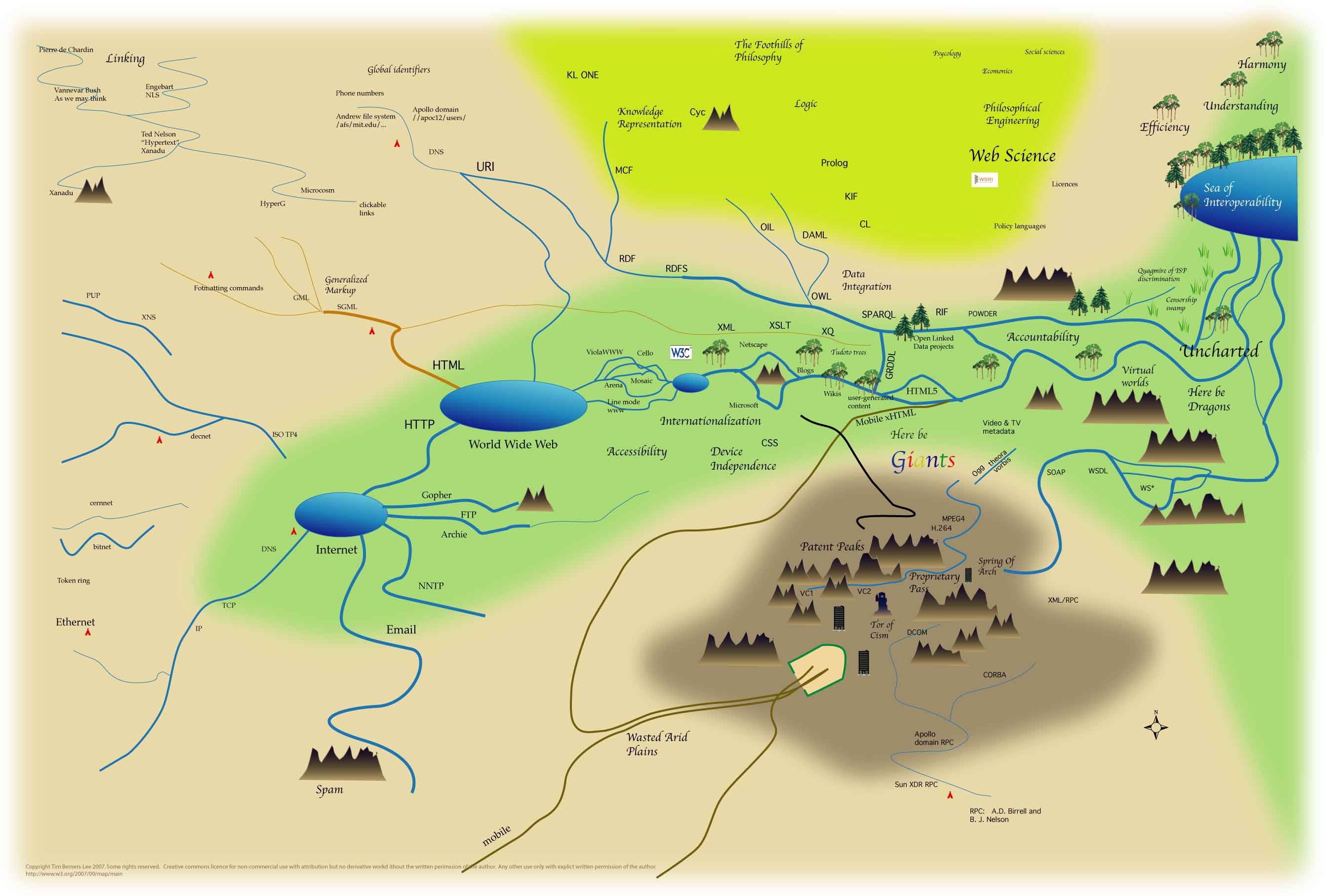
Internet, le Web vur par Tim Berners Lee
 by tehu, 2 comments
comment dire… design.
Idée amusante cependant.
Alex Faaborg - » Web 2.0 Expo Presentation
by nhoizey & 1 other
What are microformats? Why does Mozilla care about microformats? What does a microformat-aware Web browser look like? Why should Web sites expose their content using microformats?
dbpedia.org - Using Wikipedia as a Web Database
by nhoizey & 7 others (via)
DBpedia.org is a community effort to extract structured information from Wikipedia
and to make this information available on the Web. DBpedia allows you to ask
sophisticated queries against Wikipedia and to link other datasets on the Web
to Wikipedia data.


TechnicaLee Speaking: Using RDF on the Web: A Vision
by nhoizey & 1 other
(This is the second part of two posts about using RDF on the Web. The first post was a survey of approaches for creating RDF-data-driven Web applications.) All existing implementations referred to in this post are discussed in more detail and linked to in part one.


geobloggers » Blog Archive » Advanced Tagging and TripleTags
by nhoizey
Users are great and smart and do cool stuff, you can’t stop them. Therefore it’s no surprise to see them constantly pushing things to the limit, and this is why we’re seeing the start of curious tagging methods.
2006
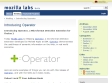
Mozilla Labs Blog : Introducing Operator
by tehu & 7 others, 2 comments (via)
parser de microformats
Et le wiki devint sémantique
by nhoizey & 9 others
grâce à ce logiciel, on voit les prémices de la réponse à la question systématique : « comment les utilisateurs pourront-ils ajouter des renseignements sémantiques ? Avec un minimum d'organisation ? en utilisant RDF, sa complexité et sa syntaxe barbare ? Et surtout facilement ? » Réponse élémentaire, mes chers lecteurs : avec la syntaxe wiki.
Trailfire: Building Vannevar's Memex
 by jackiege
The Web began as two inventions, HTML and URLs - an electronic format for pages and a way to link those pages together. Back then who could have imagined what would come of those two simple ideas? Trailfire is built on marks (as a way for users to put con
On open letter to Blogger at FactoryCity
by tehu (via)
Plus de microformats dans le nouveau blogger beta. Ca coûte rien de demander.

Planet Venus source code
by tehu (via)
Planet Venus is an experimental radical refactoring of the Planet flexible feed agregator.